|
| via Wikimedia Commons |
Somewhere along the line our parents had acquired a house in
Caldwell. I can only guess that it was in part payment for our place east of
Caldwell. The house was frame constructed, no bathroom, no running water, a
privy and woodshed; but it did have electric light, those that hung down from
the center of the ceiling. One of the first things that Bill did was get up on
the table, screw out the bulb and stick his finger in the socket. It knocked
him off the table. You can be sure that we didn’t try that again.
Arthur born
October 1912
I don’t remember anything about Arthur’s birth. I guess we
just woke up one morning and had a new brother. He was a good baby and we loved
him very much. {Arthur was born on October 6, 1912.}
School in Caldwell
This was my third year in school and Bill’s second. The
school was only a couple of blocks from our home, so we could go home for
lunch. I really don’t remember too much about this period since we only stayed
there for two – two and a half months and then we moved back to our home on the
river. Don’t remember too much about the school, teachers or other children
except a pair of twin boys who were in my class the third grade. Their name was
“Love.” Colonel and I thought the name was funny or strange.
Back on the farm we continued with the same routine, walking
the one and a quarter mile to school and other responsibilities we had.
School 1912/1913
 |
| Jessie Willcox Smith via Wikimedia Commons |
This was a seven-month school year. Up to this point, I’d
had six months of schooling and Colonel had had three months, but as I believe
I mentioned above, Mama had taught us many things and had read several books to
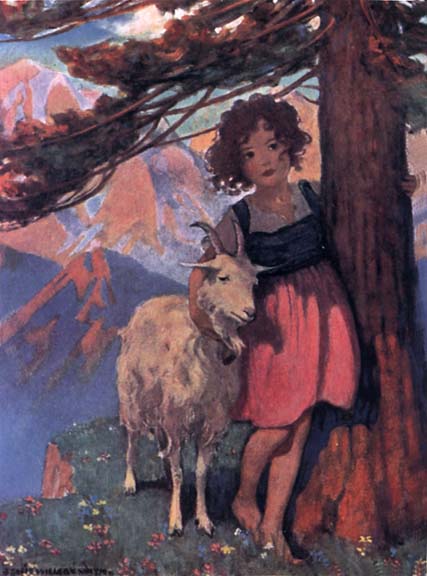
us. I believe the most interesting to us was
Heide. This was the first
school year that we had a man teacher, and for some reason I had a tough time
learning. It could have been caused by the unsettled conditions, the male
teacher, or pressure put on by older and larger students. It must be remembered
that many of these pupils were 16 to 18 years old and had had very little
schooling. There was continuous fighting at recess and the back side of the
woodshed was a popular spot for this type of activity. Even some of the boys
who stayed home would ride to school horseback and engage in some of the
activities. The male teacher did not have any control over the situation since
some of the outsiders, as well as students, were perhaps older and certainly
larger than he was. I remember that he was quite liberal with the pointer and
the sharp edge of a ruler, but it was always the smaller group that got the
punishment.
Papa had informed Colonel and me that if we got whipped at
school, we could expect the same when we got home, so we were careful not to
get into too many hassles.
Heaven knows we got into enough trouble on our own without
getting involved with other people. The male teacher lasted three to four
months and a new female teacher was hired. Things settled down to some extent,
but as far as I was concerned, the school year was a flop. I did not
pass into the fourth grade! I took it pretty hard, but with the help of my
mother, I studied hard all summer and was really ready for them the first of
school year 1913.
It didn’t take a week for a promotion into the fourth grade
and from then on, I didn’t have too much trouble. However, I was not a good
student, not too high marks. I had to work for everything. Colonel, on the
other hand, never studied much and always got pretty high grades. I still have
my eighth-grade certificate.
We had spelling contests with other schools – Deer Flats,
Central Cove, etc. It is hard to believe, but I won one contest and was the
last speller up on our side in the other contest.
The Farm 1911/1912
 |
| poplar trees via Wikimedia Commons |
By this time, the farm was being built up. We had irrigation
water. 1910 a well was drilled, it was 119 feet deep, so we had to add a piece
of pipe to the handle to make it easier pumping. The water was very hard, but
it was clear and cold, certainly easier than hauling from the spring or river.
Fruit trees and a small vineyard and berry patch had been
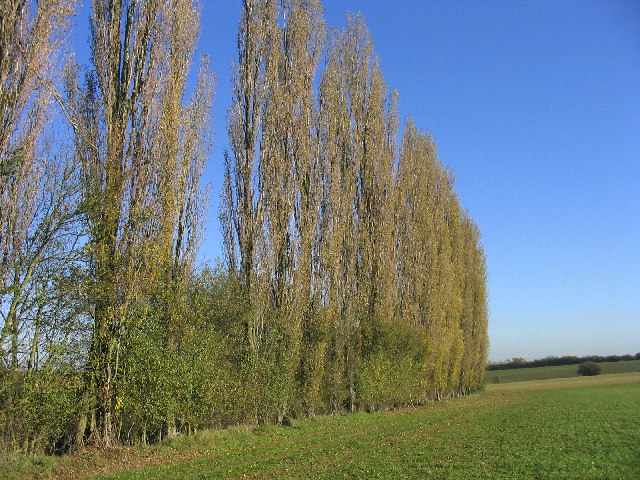
planted. The poplar trees that Mama had planted on three sides of the house had
taken hold and were doing well and giving us some needed shade.
Summer 1912
Along about this time, my father’s brother, Robert, showed
up with his wife, Madge. They pitched a tent under the trees in our back yard.
Their son, James, was born in that tent some time during the summer. Aunt Madge
was a wonderful person. She could bake the best bread I’ve ever eaten. Colonel
and I were always begging for bread or cookies. They stayed only the summer.
Papa didn’t like the way Uncle Bob handled the horses, so he asked them to
leave.
Uncle Bob, prior to their arrival at our place, had owned
some land near where the present day Ballard locks are now located. They had
two or three children there, all of whom died and are buried in one of the
cemeteries near Ballard. I’ve always wanted to check on this story, but have
never taken the time to investigate. [I could write several pages on their
story, but I don’t think it would serve a purpose.] {Bob and Madge
had three children who were born and died in Seattle: Alice Elizabeth (20 Nov 1907-11 Jan 1908), Robert William (6 Jun 1909-9 Jul 1909) and Marjory May (2 Dec 1910-21 Jan 1911). According to the Washington State Digital Archives
records, James Robert was born in Seattle in 1912. However, Henry James was
born December 18, 1913 in Idaho.}
[Pause. 1911/1912]
There was so much happening during these years that it is
hard to keep them in order.
I believe it was before Arthur’s birth that Mama became
quite ill. I remember that she got a lot of her teeth pulled and all the dentist
had to give her to deaden the pain was whiskey. I’m not sure when she had the
operation. Papa took her to Boise where her appendix was removed along with a
few other things. Bill and I were left alone much of the time, and I remember
we were very worried. It was a very troublesome time for us. Before Mama got
home, Papa hired a woman to help out. I don’t remember her name. I do know that
she couldn’t cook very well and our diet of raw pancakes did not go well with
us.
I don’t think the farm was producing very much at this
point. The trees on three sides of the house were doing well and giving us some
much needed shade. Fruit trees had been planted - peach, pear, prune and grapes
(concord).
We were still tied to the nineteenth century at this point.
Tasks were accomplished in about the same manner they had been for the past 50 –
75 years. Change was very slow. Although the internal combustion engine had
been invented and there was electricity in urban areas, it was going to be many
years before such conveniences would do the people in the outback very much
good. It was still an animal-powered economy, and would continue to be up into
the late 1920s.
It took a lot of time and effort and land just to produce
enough to feed a family and the animals necessary who supplied the power to do
the work. As stated somewhere above, Papa usually kept four to six horses, two
to four cows and their offspring, and of course a few pigs.
We had a derrick that Papa built to stack hay. When he
butchered in the fall, the animal, or animals, were hauled to the end of the
boom. And since we did not have refrigeration, they would stay there until
consumed, which was always before the end of winter, frozen solid.
At school, Colonel and I had special friends that liked to
do the things we did. These two brothers were about the same age as we were.
They lived about one mile south of the school and about one and a half miles
west of our place. Their names – Giles and Edmund Bacon – maybe more on them
later. {Giles and Edmund Bacon were the sons of Robert S. and Catherine Bacon.}
Dress (clothes)
I must take time here to describe our dress and other living
conditions.
Our parents kept us well dressed considering the times and
economic conditions. To school we always wore bib overalls as did all other
boys, but on Sundays and the occasional trip to Caldwell, we always wore
knickers with black cotton stockings held up by a harness that fitted over the
shoulders and fastened to the top of the stocking with a sliding clip, about
the same as ladies used for the same purpose, only theirs were fastened to a
corset. We sure hated these things and eventually got around to using an
elastic band that held the stocking just about the knee and also shut off all
circulation to the lower leg and feet. I think it was about this time that
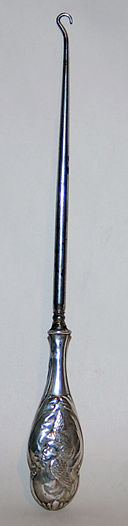
button shoes were in style. This also was a miserable situation since you
always had to carry a button hook around with you. Maybe more about shoes
later.
Mama made nearly all our shirts, so we had various colors
and shapes and sizes. One time, she got real fancy and bought some pongee, tan
(Dark) in color. According to the dictionary, it is a light silk produced by
wild silk worms that feed on oak leaves. We liked these shirts. They were light
and cool. I don’t think we wore them out, but probably outgrew them.
We generally wore caps for school, church and visits to
town. But for everyday summer wear, we always had wide brim straw hats (not
so-called Western style known today). We always went barefoot in the summer, so
it was tough getting into those button shoes on Sunday.
We always had our hair clipped short (shaved) in the spring.
It wasn’t until I was 14-15 before I began to feel embarrassed about the shaved
head.
Clothes – Mama and Papa
 |
| William Rutherford Aitchison |
Papa had
one suit that was worn only on Sundays,
special events or to town. These suits were always made of wool, so you can
imagine how uncomfortable it must have been in hot weather. Cotton socks, laced
shoes. Men didn’t generally wear button shoes. And felt hat with wide brim.
Shirts Mama made. They were cotton and cold have been any color. I don’t think
we wore underwear in summer.
Mama wore long dresses and skirts, button shoes, black
cotton stockings and long hair. For the life of me, I’ll never be able to
understand how she managed dressed like that and work over a hot wood or coal
fire with 100 to 120 degrees in the shade outside. Washing in a tub with a
washboard wasn’t an easy trick, either. All women had to do it, so Mama was not
an exception. I believe I explained the soap making above.
Sam Wickham was an exception. He wore wool long johns in the
summer. He said it kept him cool!!?
Farming
Farming in those days was a chancy job. First, you had to
grow enough food for the family and all of the food for the animals that helped
produce the food for the family, so you worked at least half of the land just
to do those two things. We usually had four to six horses, two to four cows and
their offspring as well as four to ten or twelve hogs. Our consumption of meat
was pretty heavy, so one to two hogs were consumed each year as well as a beef
and, of course, in between was chicken, turkey and sometimes a goose. We ate
lots of potatoes and corn. Since Papa raised the corn primarily for the hogs,
we had lots of it. Some of it we ground into meal and Mama made hominy out of
it, too. The pigs were a cash crop, so they got the most of it.
 The Poulsbo Washington Family History Center will hold it's second monthly open house on Friday, August 24th, from 10:00 a.m. until 12:00 noon. Consultants will be on hand to introduce visitors to the facility and the resources available there. Basic forms for recording your genealogy will also be available.